


60 Years of MRMC: Spotlight on Founder Mark Roberts
As we celebrate 60 Years of Mark Roberts Motion Control, we wanted to spotlight the contribution of our founder. When people speak of innovation in the world of film, animation, and motion control, they often mention the machines, the technology, the groundbreaking shots. But behind the systems that transformed modern visual effects stands one man with an extraordinary story – Mark Dethridge Roberts – the founder and visionary behind Mark Roberts Motion Control. Mark’s journey is not simply a tale of engineering brilliance; it’s the story of an adventurous spirit, a relentless creator, and a man who built a global industry leader from the spare room of his home.
Mark Roberts: The Relentless Inventor and Motion Control Innovator
From Outback Aspirations to World Adventures
Born in Western Australia in the early 1930s, Mark grew up far from the world of film sets and precision robotics. Yet even in his youth, he showed a curiosity for
how things worked — a curiosity strong enough to lead him to study civil engineering at technical college. But Mark wasn’t someone destined for a predictable path. After college, he jumped headfirst into a string of jobs as eclectic as they were demanding: sugar‑cane cutting in Northern Australia, inspecting taxi radios, and he even tried his hand at grave digging! His hunger for exploration pushed him onward. In 1958, armed with a round‑the‑world ticket, he travelled to Washington, D.C. to work — the first major step in a lifetime of movement and reinvention.
The Unexpected Road to Film
From the U.S., Mark migrated to England, where he caught the engineering and racing bug during the pioneering era of Lotus Racing Cars. As a storeman and apprentice designer, Mark worked alongside innovators shaping the future of motorsport — and occasionally he even took the wheel himself. But it was a friend’s invitation in the early 1960s that changed everything. Mark began working for Oxberry, an American company that manufactured animation stands and optical printers used in special effects and film titles. Immersed in this world, he found a new calling. And that calling gave rise to the idea that would define his life: he wanted to build his own company.
A Company Born in a Spare Room
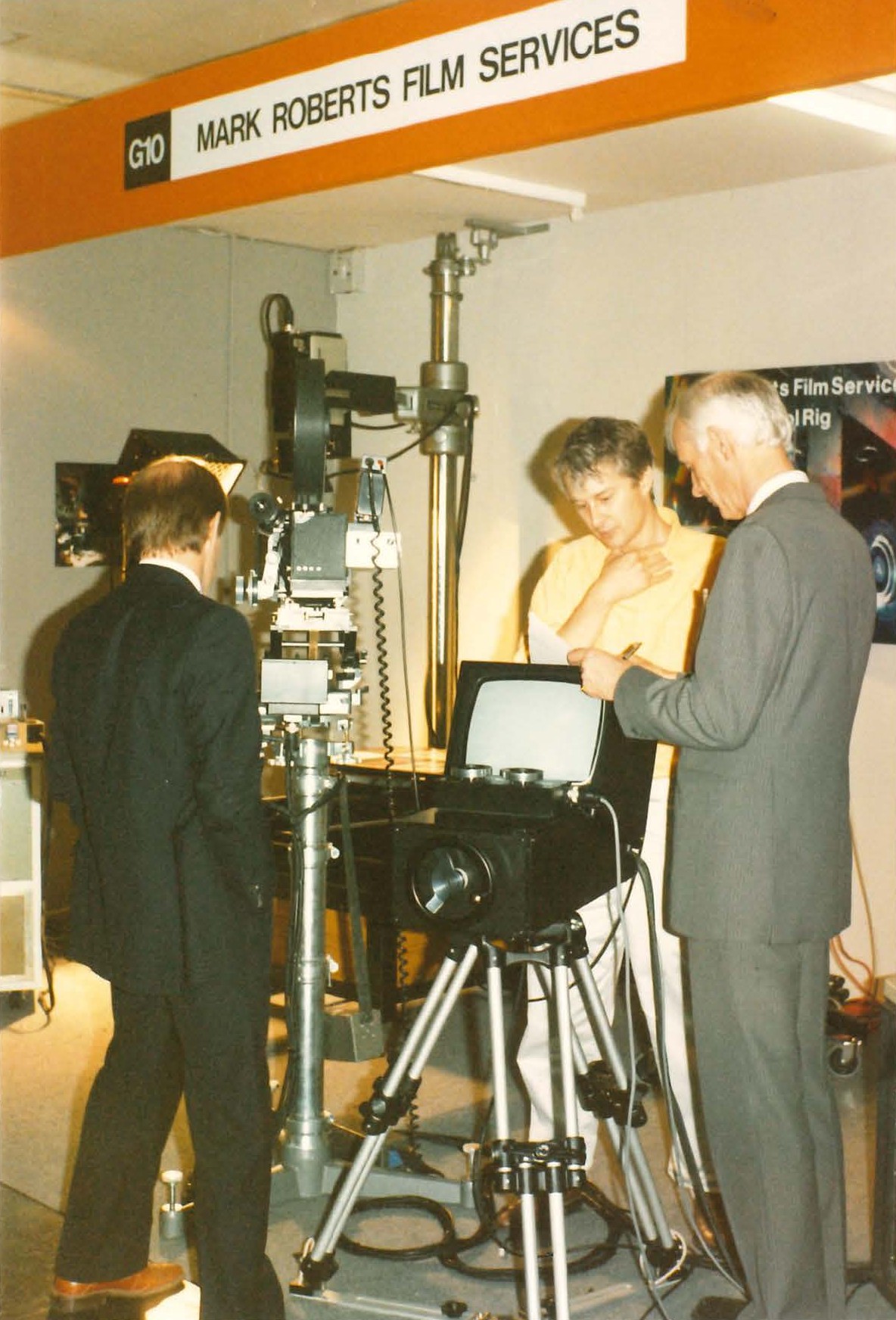
In 1966, from the spare room of his home in Berkshire, Mark founded Mark Roberts Film Services. His early days were a testament to sheer determination, servicing special‑effects equipment in London during nights and weekends while spending the rest of his time designing electronic control systems that would replace the electromechanical solutions of the era. By 1972, after moving his family to East Grinstead, Mark continued working from home, producing a simple computer system for animation stands that synchronised motion between the table and the camera. It was humble, innovative, and the beginning of something extraordinary.
Inventing the Future of Animation and Motion Control
Through the 1970s, Mark developed increasingly sophisticated computer systems capable of complex techniques like slit-scan and streaking, features that pushed technical boundaries and caught the attention of leading cameramen, including the legendary Ken Morse. By 1976, Mark had moved into a small workshop in East Grinstead, where he produced one of the first rostrum cameras operated by an analogue computer. A year later, he introduced the first digital version – a revolution in speed and precision for animation work. The industry was changing fast. And Mark was leading it.
Star Wars, Special Effects, and the Rise of Motion Control
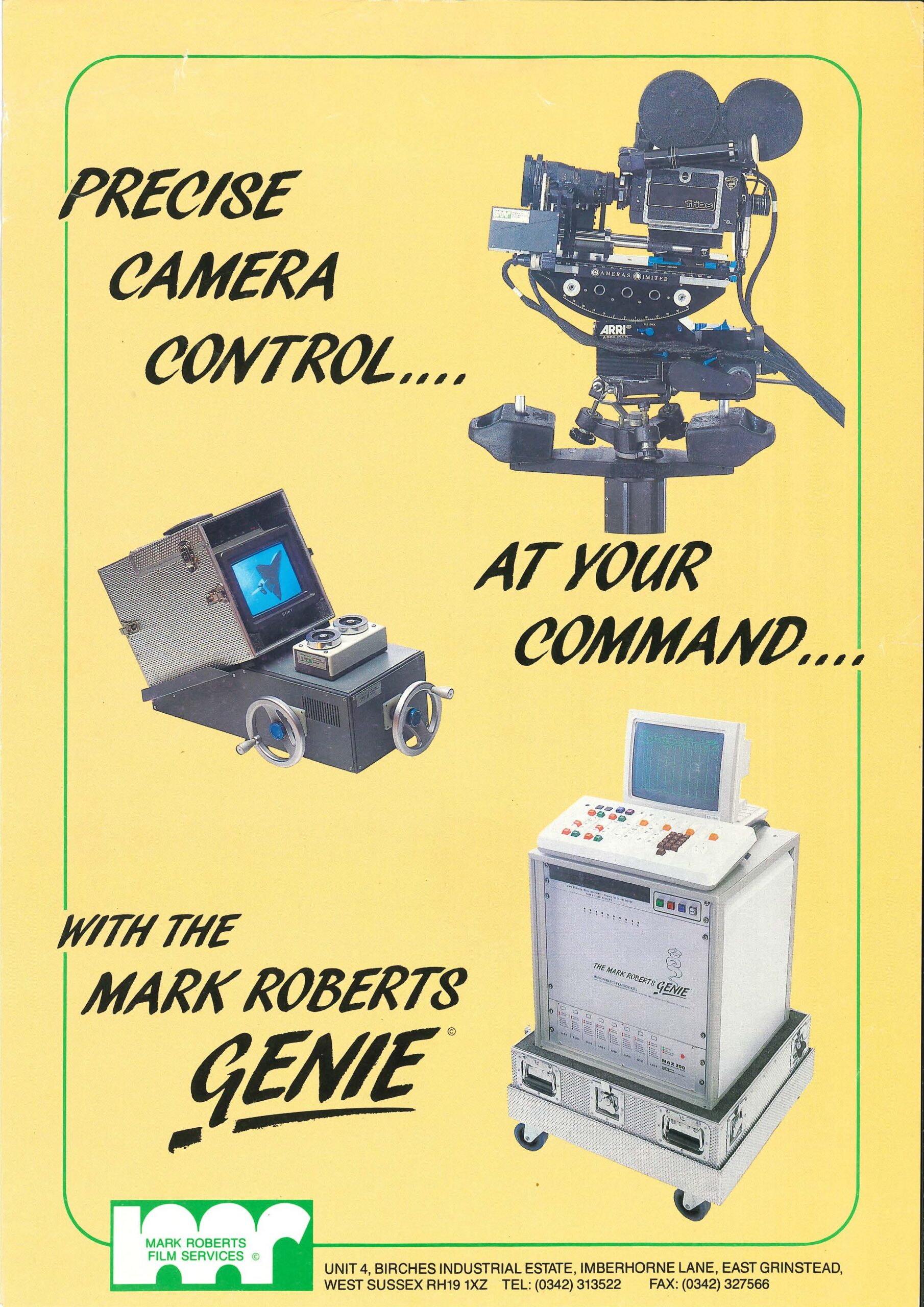
The release of Star Wars in 1977 ignited global demand for motion control technology. Filmmakers needed accuracy, repeatability, and camera movement that felt alive.Mark responded exactly the way he always had: by inventing. He engineered full motion control systems that delivered unprecedented stability and adaptability. As orders grew, the company moved into larger premises in 1985, enabling the production of floor‑mounted systems, overhead rigs, and custom Panther dollies, which were modified from manual dollies to fully robotic repeatable dollies, that set new performance standards. Among his most famous systems was the MRC4 and Genie, affectionately marketed as “The Motion Control System that grants your every wish!” These systems powered effects for films such as Santa Claus, Aliens, Batman, countless TV shows, commercials, and music videos.
MRMC Is Born — along with Flair and Cyclops.
In the early 1990s, the company officially became Mark Roberts Motion Control to reflect its increasingly ambitious product range. Custom builds for major post‑production houses led to demand for an “off‑the‑shelf” system – one with power, precision, and reliability standardised for industry use. The answer came in 1993: Cyclops. Designed specifically for the company Cell Animation and paired with in‑house‑developed software called Flair, Cyclops brought digital camera movement to an entirely new level. Flair could save and replay exact camera positions for every frame, integrate with 3D tools like Softimage and Alias/Wavefront, and plan complex CG moves before executing them in real life. Flair and Cyclops were a huge statement: Mark Roberts was not just keeping pace with the industry – he was driving it.
Milo: The Legendary Robot that Shaped the Industry and won an Oscar.
Innovation never stops, and neither did Mark’s customers. They wanted portability without losing performance. Mark delivered once again. Enter Milo, a revolutionary motion‑control rig that could be transported in a van (a real coup for the industry) , set up in 45 minutes, and could move a camera at more than 3 metres per second. It could shoot from half a metre below ground to over 4 metres high, offering staggering versatility. Milo didn’t just meet industry expectations it reshaped them and has been used on set filming everything from Bond to Alice in Wonderland. In 1999 the Milo was recognised by the Academy for a Scientific and engineering Oscar for its outstanding contribution to the industry.
A Legacy Engineered by Passion
Today, MRMC stands globally recognised as a leader in motion control and robotics for film, broadcast, VFX, and beyond. But at its heart remains the story of one man – a tireless problem solver, adventurer, and inventor with a love for engineering and a gift for seeing what the industry needed before it knew itself. Mark Dethridge Roberts built his company the same way he built his machines: with precision, creativity, and unstoppable momentum. And his legacy continues to inspire every system, every innovation, and every person who works with MRMC technology today.